 English
 русский
 Français
 中文简体
中文简体 Português
 Español
 italiano
 عربى
عربى فارسی
فارسی

High-Temperature Quarter-Turn Ball Valves: Where the Real Limits Are Set
Ask which part of a ball valve gives up first at 400°C and most buyers guess the ball or the body. It is neither. The seat decides, and almost every other specification follows from that one choice.
Put a soft-seated floating ball valve on a 360°C hot-oil line and it will pass the shop test at ambient temperature. It will also start weeping past the seat within the first few thermal cycles, because PTFE creeps under load long before anyone notices a problem on the test bench. That is the most expensive way to learn where soft seats end.
Here is the short version for anyone specifying right now: above roughly 230°C of continuous service, metal-seated construction for a high temperature quarter turn ball valve stops being an upgrade and becomes the baseline. Between 200°C and 300°C, high-performance polymers such as PEEK buy limited headroom. Beyond that, body metallurgy, pressure class at temperature, packing, bolting and actuator sizing all follow from the seat decision, and from the pressure-temperature data in ASME B16.34 rather than the class stamped on the nameplate.
If you would like a refresher on the wider family first, our guide to quarter-turn valve types and applications covers ball, plug and butterfly designs before you go deep on heat.
The Temperature Ladder: Where Soft Seats Stop
For ball valves, "high temperature" starts where polymers stop. PTFE and reinforced PTFE seats serve comfortably to about 200°C, with some blends reaching 230°C. PEEK seats push continuous service to around 250°C and tolerate short excursions near 300°C, with far better resistance to cold flow. Above those ceilings the seat must be metal: lapped steel or stainless faces, often carrying cobalt-chromium or carbide coatings applied at high velocity, supported by springs or seat geometry that maintains contact as parts expand and contract.
Metal-seated quarter-turn ball valves built this way routinely serve from 425°C to 650°C, and specialised designs reach higher still in flue-gas and ash duty. The trade is honest but real: a lapped metal seal is tight, yet it is less forgiving of debris than a polymer seat and it accepts a defined leakage class rather than bubble-tight perfection. Specify the class you actually need instead of defaulting to the tightest figure on a datasheet.
| Sealing element | Typical continuous limit | Behaviour to watch |
|---|---|---|
| PTFE / reinforced PTFE | About 200°C, some blends to 230°C | Cold flow under load; pressure derating near the limit |
| PEEK | About 250°C, excursions to 300°C | Cost rises sharply; still a polymer, so check fire-safe compatibility |
| Metal seat, CoCr or carbide coated | 425°C to 650°C, higher in special designs | Torque increases with heat; lapped faces need clean media |
| Graphite packing and seals | To about 550°C and above | Slow oxidation over years; live loading extends life |
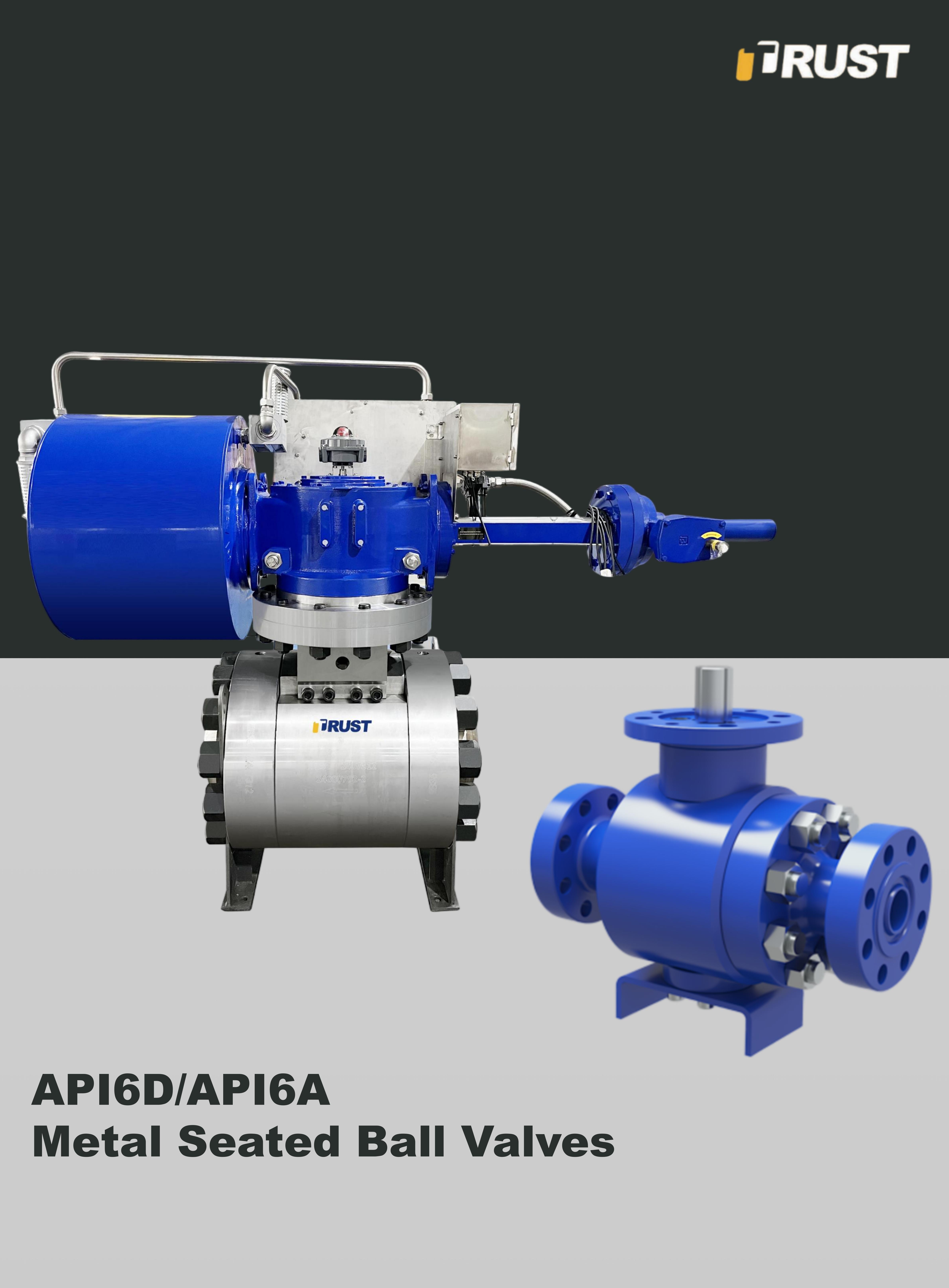 Metal Seated Ball Valves for Severe ServicesMetal-to-metal seated ball valves built for high-temperature, high-pressure service from 425°C to 650°C. A strong choice here when duty exceeds polymer seat limits, provided the specified leakage class matches the actual process needs.View Product →
Body, Bolting and the Pressure-Temperature Pair
The seat sets the ceiling, but the casting decides whether the valve is allowed near it. Carbon steel WCB bodies work to about 425°C under ASME B16.34, though allowable stress falls steadily as temperature climbs. Chrome-moly grades WC6 and WC9 take over across the 425°C to 575°C band common in refining and petrochemical service, and stainless bodies earn their place where thermal cycling and corrosion share the duty.
This is where pressure class confuses buyers. A Class 300 valve is Class 300 at every temperature, but the pressure it may hold at 400°C is roughly half of its room-temperature allowable. Check the rating at design temperature, every time.
Heat also attacks the seal between stem and bonnet. Graphite packing is standard for hot service, and live-loaded packing with Belleville washers keeps stress on the packing as the valve cycles and the bolting relaxes. On insulated lines, an extended bonnet lifts the packing and the actuator out of the heat, which lengthens seal life and keeps gearboxes and hand levers touchable.
Torque, Thermal Cycling and Actuation
Operating torque does not stand still when the line gets hot. Differential expansion between ball and seats preloads the seating surfaces, coated metal faces grip harder at temperature, and the first turns after a cool-down from 500°C can take noticeably more effort than the nameplate suggests. Actuators for hot-service ball valves are therefore sized with real margins, commonly 1.3 to 1.5 times calculated seat torque, and more where the valve cycles rarely or sits idle between movements.
Cycling matters as much as the peak. A valve that moves daily needs seat geometry that wipes and scrapes rather than jams; a valve that sits closed for months needs spring-loaded seats that hold contact through creep and relaxation. Fire-safe construction to API 607 or ISO 10497, with graphite secondary seals, is the norm wherever hot hydrocarbons are present. In this duty the certification is not paperwork; it is the design brief for the entire seal package.
In hot service a valve is never truly off duty. Every cycle from ambient to design temperature works the seats, the packing and the bolting. Specify for the cycling, not just for the peak.
Where These Valves Earn Their Keep
Refineries and petrochemical plants put quarter-turn ball valves on hot-oil circuits, transfer lines and reactor loops where fast isolation matters more than fine modulation. Upstream and midstream operators meet the same physics in steam-assisted recovery and hot manifolds, which is why our oil and gas applications page groups these valves by duty rather than by catalogue number.
Double isolation in hot manifolds
Where maintenance requires positive isolation without a spare spool, integral DBB and DIB trunnion-mounted designs put two sealing barriers and a bleed function into one body. In high-temperature hydrocarbon service this is usually a metal-seated trunnion valve, chosen as much for its torque stability as for its double-isolation function.
 Integral DBB & DIB Trunnion Mounted Ball ValvesTrunnion-mounted ball valves with integral double block and bleed function in a single body. Relevant in high-temperature hydrocarbon service where positive isolation and two sealing barriers are required without installing a spare spool.View Product →
Throttling hot media without eating the seat
Control duty at temperature is a different job. Characterised V-ball designs with metal seats hold a stable flow curve on hot gas, hot oil or abrasive slurry, and their shearing action handles media that would defeat many conventional control valves. What they need in return is accurate duty data, including flow, differential pressure and the full temperature range, so the seat and coating are matched to the real service rather than the average one.
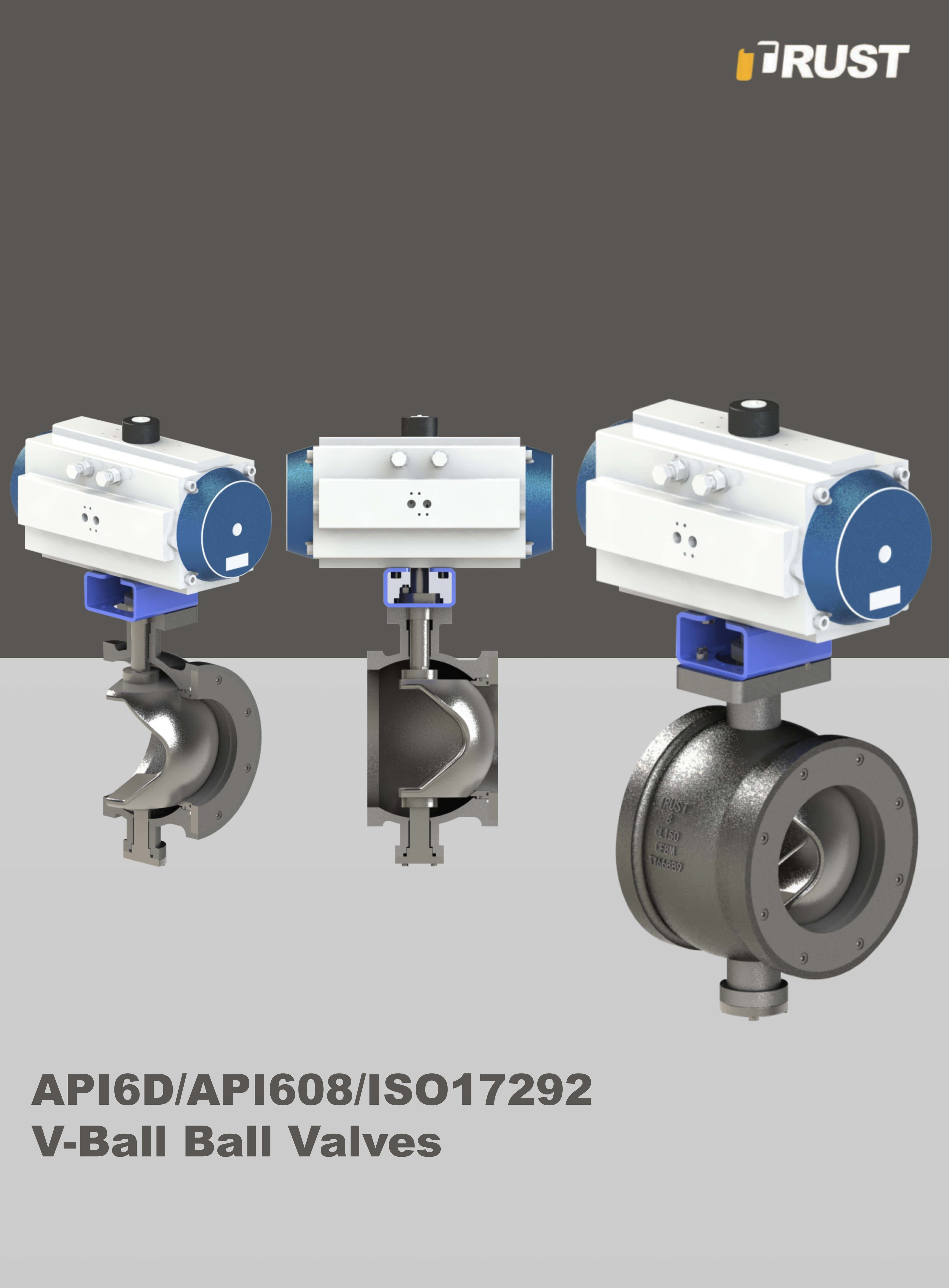 V-Ball Ball Valves for Precise ThrottlingV-notched ball valves with metal seats deliver a stable flow curve and shearing action on hot gas, hot oil or abrasive slurry. Worth reviewing where high-temperature control duty requires accurate flow, pressure and temperature data for seat matching.View Product →
Coal chemical plants add abrasion to heat, and power stations add cycling. Both reward the same discipline: match the seat family to the worst case the valve will ever see, not to the typical day.
A Specification Checklist Before You Buy
High-temperature ball valve failures are rarely exotic. Most trace back to a duty description that was incomplete on day one. Before requesting a quotation, put these on the table:
- Media, cleanliness and erosive content, since particulates dictate seat coatings.
- Continuous design temperature and the worst credible excursion.
- Design pressure at design temperature, taken from the applicable pressure-temperature tables.
- Line size and port, with full bore where pigging or low pressure drop matters.
- End connections, and weld compatibility of the body alloy with your pipe.
- The leakage class you actually need, per ISO 5208 or API 6D.
- Fire-safe certification to API 607 for hot hydrocarbon service.
- Actuation details: torque margin, fail position and the ISO 5211 mounting interface.
- Stem extension if the line will be insulated, so packing and actuator stay cool.
The Takeaway
Start from the seat. PTFE stops near 200°C to 230°C, PEEK stretches to about 250°C with short excursions, and beyond that metal-seated construction is the baseline for a high temperature quarter turn ball valve. Let ASME B16.34 set the pressure conversation at temperature, size the actuator for torque that rises with heat, and insist on graphite-based sealing and fire-safe construction wherever hot hydrocarbons flow.
Specify for the excursion and the cycling, not the steady state. That single habit prevents most premature seat failures in hot service.
It is also the logic behind our quarter-turn range at Trust Valve: soft-seated floating ball valves for moderate duties, metal-seated severe-service designs, integral DBB and DIB trunnion valves and V-ball control valves, each matched to the temperature band it will actually live in. Bring us the duty, and the valve follows.
 N.º 100, Avenida Xiejin, Zona de Desenvolvimento Económico do Condado de Funing, Cidade de Yancheng, Província de Jiangsu
  +86-515-87398111
  office@trustvalve.com